
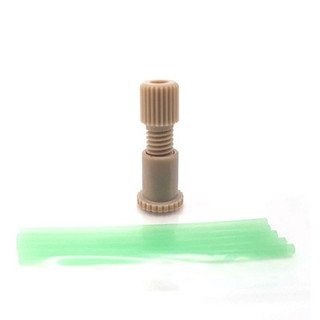
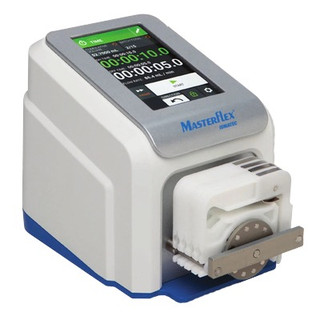
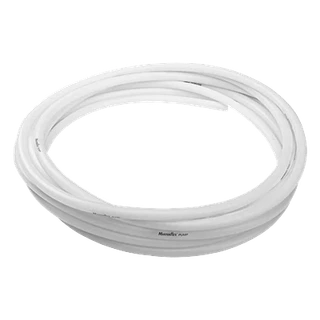
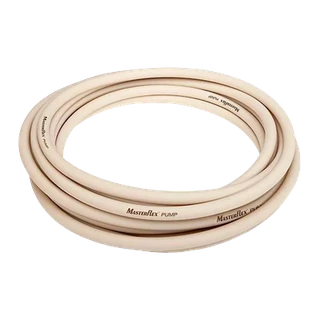
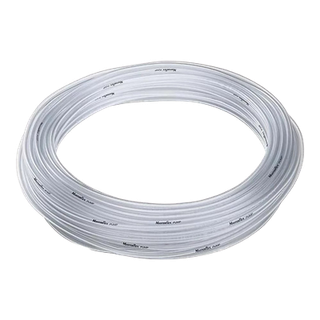
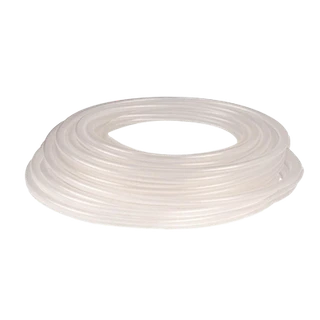
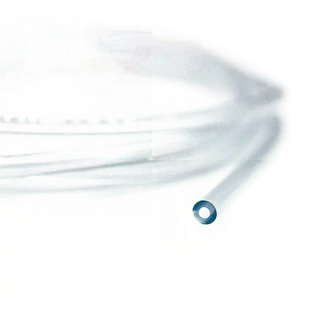
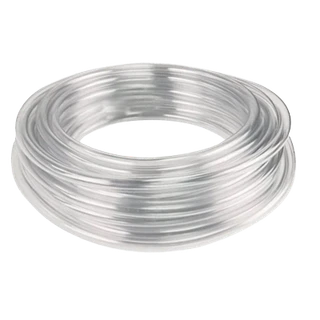
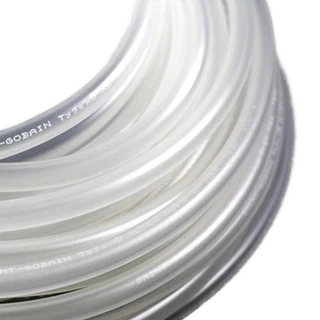

Bij de keuze van tube voor microfluïdische toepassingen is het waarborgen van chemische compatibiliteit cruciaal voor het behoud van de integriteit en prestaties van het systeem. Tygon E-LFL is een uitstekende allrounder voor toepassingen die robuuste chemische compatibiliteit en langdurige prestaties in peristaltische pompen vereisen. De ultragladde binnenwand en uitzonderlijke biocompatibiliteit zorgen voor een veilige en efficiënte verwerking van gevoelige stoffen. Bovendien biedt het een brede chemische bestendigheid, onder meer tegen ozon en UV-licht, wat zorgt voor langdurige duurzaamheid en betrouwbaarheid in diverse omgevingen. Met de langste levensduur van alle Tygon-formules onderscheidt het zich als de voorkeurskeuze voor veeleisende microfluïdische toepassingen.
Net als alle andere materialen heeft Tygon E-LFL echter zijn beperkingen, en niet elke chemische stof is ermee compatibel. Daarom is inzicht in de compatibiliteit essentieel om aantasting van tube te voorkomen en de veiligheid te waarborgen. In deze gids presenteren we een uitgebreide tabel met de chemische compatibiliteit van Tygon E-LFL. Deze tabel, gebaseerd op de gegevens over chemische compatibiliteit (bij 23 °C) verstrekt door Saint-Gobain, is bedoeld om ingenieurs, technici en onderzoekers te helpen snel te bepalen ofTygon E-LFL-tube geschikt is voor hun specifieke toepassingen, zodat betrouwbare en duurzame prestaties in diverse chemische omgevingen worden gewaarborgd.
Raadpleeg deze tabel om weloverwogen keuzes te maken en de efficiëntie en veiligheid van uw systeem te waarborgen.
💡 De beoordelingssleutel voor chemische compatibiliteit is als volgt:
- E = Uitstekende chemische compatibiliteit (geen effect)
- G = Goede chemische compatibiliteit (gering effect: lichte aantasting of verkleuring)
- F = Matig (matig effect: niet aanbevolen voor continu gebruik; verzachting, verlies van sterkte, uitzetting en/of krimpen)
- X = Ernstig effect (niet aanbevolen voor gebruik; sterke verzachting, uitzetting en/of krimpen)
- w = Water
- alc = Alcohol
- % = Concentratie (Indien de concentratie niet wordt vermeld, ga dan uit van een concentratie van 100% of de maximale oplosbaarheid in water)
🚨Concentraties van vloeistoffen bij kamertemperatuur worden weergegeven in volume-%. Concentraties van vaste stoffen bij kamertemperatuur worden weergegeven in gewichts-%.
🚨 De compatibiliteitsbeoordelingen in deze tabellen dienen uitsluitend als algemene richtlijn en zijn mogelijk niet volledig of nauwkeurig. Ze houden geen rekening met potentiële contaminatie of veranderingen in vloeistofeigenschappen als gevolg van interactie met de tube. Wij bieden geen garantie met betrekking tot de geschiktheid van materialen voor specifieke doeleinden of de invloed van de tube op de vloeistofkwaliteit. Voer voor kritische toepassingen specifieke tests uit of win deskundig advies in.
Tygon E-LFL- tube: Tabel met chemische compatibiliteit
| Chemische stof | Compatibiliteit |
|---|---|
| A | |
| Acetaldehyde | X |
| Acetamide, 67% in w | X |
| Acetaatoplossingen (algemeen) | X |
| Azijnzuur, 10% in w | E |
| Azijnzuur, 50-60% in w | E |
| Azijnzuur, ijsazijn, 100% | F |
| Azijnzuuranhydride | X |
| Aceton | X |
| Acetonitril | X |
| Acetylbromide | X |
| Acetylchloride | X |
| Acethyleengas | E |
| Acrylonitril | X |
| Adipinezuur, 100% in alc | X |
| Lucht | E |
| Algemene alcoholen | X |
| Alifatische koolwaterstoffen | X |
| Allylalcohol | X |
| Aluin, 5% in w | E |
| Aluminiumchloride, 53% in w | E |
| Aluminiumhydroxide, 2% in w | E |
| Aluminiumzouten | E |
| Aluminiumsulfaat, 50% in w | E |
| Aminen | X |
| Ammoniakgas | E |
| Ammoniak, watervrije vloeistof | G |
| Ammoniumacetaat, 45% in w | E |
| Ammoniumcarbonaat, 50% in w | E |
| Ammoniumhydroxide, 5-10% in w | X |
| Ammoniumhydroxide, 30% in w | F |
| Ammoniumpersulfaat, 30% in w | E |
| Ammoniumzouten | E |
| Ammoniumsulfaat, 30% in w | E |
| Amylacetaat | X |
| Amylalcohol | X |
| Amylchloride | X |
| Aniline | X |
| Anilinehydrochloride | X |
| Antimoniumzouten | E |
| Koninginnewater (Aqua Regia) | X |
| Aromatische koolwaterstoffen | X |
| Arseenzuur, 20% in w | E |
| Arseenzouten | E |
| ASTM-referentieolie nr. 1 | X |
| ASTM-referentienr. 2 Olie | X |
| ASTM-referentienr. 3 Olie | X |
| B | |
| Bariumcarbonaat, 1% in w | E |
| Bariumhydroxide, 5% in w | E |
| Bier | E |
| Benzaldehyde | X |
| Benzeen | X |
| Benzeensulfonzuur | X |
| Benzoëzuur | X |
| Benzylalcohol | X |
| Bleekloog, 22% in w | F |
| Borax, 6% in w | E |
| Boorzuur, 4% in w | E |
| Broom, watervrije vloeistof | X |
| Butadieen | E |
| Butaan | E |
| Butylacetaat | X |
| Butylalcohol | X |
| Boterzuur | X |
| C | |
| Calciumcarbonaat, 25% in verdunde zuren | E |
| Calciumchloride, 30% in w | E |
| Calciumhydroxide, 10% in glycerol | X |
| Calciumhypochloriet, 20% in w | E |
| Calciumnitraat, 55% in w | E |
| Calciumzouten | E |
| Calciumsulfaat, 1% in w | E |
| Koolstofdioxide, nat/droog | E |
| Koolstofdisulfide | X |
| Koolmonoxide | E |
| Koolstoftetrachloride | X |
| Koolzuur | E |
| Ricinusolie | X |
| Cellosolve | X |
| Cellosolve-acetaat | X |
| Chloor, droog gas | E |
| Chloor, nat gas | F |
| Chloorazijnzuur, 20% in w | E |
| Chloorbenzeen, mono, di, tri | X |
| Chloroform | X |
| Chloorsulfonzuur | X |
| Chroomzuur, 10-20% in w | G |
| Chroomzuur, 50% in w | F |
| Citroenzuur, 10-20% in w | E |
| Kokosolie | X |
| Maisstroop | E |
| Katoenzaadolie | X |
| Cresol (m, o of p) | F |
| Cresylzuur | X |
| Koper(II)chloride, 40% in w | E |
| Koper(II)nitraat, 70% in w | E |
| Koper(II)sulfaat, 13% in w | E |
| Cyclohexaan | X |
| Cyclohexanon | X |
| D | |
| Detergentoplossingen | E |
| Dibutylftalaat | F |
| Dieselbrandstof | X |
| Diethylamine, 2,5% in w | E |
| Diethyleenglycol | E |
| Dimethylformamide | X |
| Dimethylsulfoxide (DMSO) | X |
| Dioctylftalaat | F |
| Dioxaan | X |
| E | |
| Ether | X |
| Ethylacetaat | X |
| Ethylalcohol (Ethanol) | X |
| Ethylbenzoaat | X |
| Ethylchloride | X |
| Ethylether | X |
| Ethyleenbromide | X |
| Ethyleenchloorhydrine | X |
| Ethyleendichloride | X |
| Ethyleenglycol | E |
| Ethyleenoxide | E |
| F | |
| Vetzuren | X |
| Ijzer(III)chloride, 43% in w | E |
| Ijzer(III)nitraat, 60% in w | E |
| Ijzer(III)sulfaat, 5% in w | E |
| Ijzer(II)chloride, 40% in w | E |
| Ijzer(II)sulfaat, 5% in w | E |
| Fluoorboriumzuur, 48% in w | E |
| Fluorgas | X |
| Fluorkiezelsuur, 25% in w | E |
| Formaldehyde, 37% in w | X |
| Mierenzuur, 25% in w | E |
| Mierenzuur, 40-50% in w | G |
| Mierenzuur, 98% in w | F |
| Freon 11 | E |
| Freon 12 | E |
| Freon 22 | E |
| Vruchtensap | E |
| Stookolie | X |
| Furfural | X |
| G | |
| Galluszuur, 17% in aceton | X |
| Autobenzine | X |
| Gelatine | E |
| Glucose, 50% in w | E |
| Glycerol (Glycerine) | E |
| Glycolzuur, 70% in w | E |
| H | |
| Heptaan | X |
| Hexaan | X |
| Hydrazine | X |
| Waterstofbromidezuur, 100% in w | F |
| Waterstofbromide, 20-50% in w | E |
| Zoutzuur, 10% in w | E |
| Zoutzuur, 37% in w | F |
| Blauwzuur | E |
| Waterstoffluoride, 10% in w | E |
| Waterstoffluoride, 25% in w | F |
| Waterstoffluoride, 40-48% in w | X |
| Waterstofgas | E |
| Waterstofperoxide, 10% in w | E |
| Waterstofperoxide, 3% in w | E |
| Waterstofperoxide, 30% in w | E |
| Waterstofperoxide, 90% in w | X |
| Waterstofsulfide | E |
| Hydrochinon, 7% in w | E |
| Hypochloorzuur, 25% in w | E |
| I | |
| Jodium, 50 ppm in w | E |
| Isobutylalcohol | X |
| Isooctaan | X |
| Isopropylacetaat | X |
| Isopropylalcohol | X |
| Isopropylether | X |
| J | |
| Vliegtuigbrandstof, JP8 | X |
| K | |
| Kerosine | X |
| Ketonen | X |
| L | |
| Lakoplosmiddelen | X |
| Melkzuur, 3-10% in w | E |
| Melkzuur, 85% in w | X |
| Reuzel, dierlijk vet | F |
| Loodacetaat, 35% in w | E |
| Loodzouten | E |
| Citroenolie | X |
| D-limoneen | X |
| Linolzuur | X |
| Lijnolie | X |
| Smeeroliën, aardolie | X |
| M | |
| Magnesiumcarbonaat, 1% in w | E |
| Magnesiumchloride, 35% in w | E |
| Magnesiumhydroxide, 10% in verl. zuur | E |
| Magnesiumnitraat, 50% in w | E |
| Magnesiumsulfaat, 25% in w | E |
| Maleïnezuur, 30% in w | X |
| Appelzuur, 36% in w | E |
| Mangaanzouten | E |
| Kwik(II)chloride, 6% in w | E |
| Kwik(II)cyanide, 8% in w | E |
| Kwik | E |
| Kwikzouten | E |
| Methaangas | E |
| Methylacetaat | X |
| Methylalcohol (methanol) | X |
| Methylbromide | X |
| Methylchloride | X |
| Methylethylketon (MEK) | X |
| Methylisobutylketon | X |
| Methylmethacrylaat | X |
| Methyleenchloride | X |
| Melk | E |
| Minerale olie | G |
| Mineral spirits | X |
| Melasse | E |
| Monoethanolamine | X |
| Motorolie | X |
| N | |
| Nafta | X |
| Naftaleen | X |
| Aardgas | E |
| Nikkelchloride, 40% in w | E |
| Nikkelnitraat, 75% in w | E |
| Nikkelzouten | E |
| Nikielsulfaat, 25% in w | E |
| Salpeterzuur, 10% in w | E |
| Salpeterzuur, 35% in w | G |
| Salpeterzuur, 68-71% in w | X |
| Nitrobenzeen | X |
| Nitromethaan | X |
| Salpeterigzuur, 10% in w | E |
| Stikstofoxide | E |
| O | |
| Dierlijke oliën | X |
| Essentiële oliën | X |
| Hydraulische oliën (fosfaatester) | X |
| Koolwaterstofoliën | X |
| Plantaardige oliën | X |
| Oliezuur | X |
| Oleum, 25% in w | E |
| Ortho-dichloorbenzeen | X |
| Oxaalzuur, 12% in w | F |
| Zuurstof | E |
| Ozon, 300 pphm | E |
| P | |
| Palmitinezuur, 100% in ether | X |
| Paraffines | X |
| Perchloorzuur, 67% in w | X |
| Perchloorethyleen | X |
| Fenol, 5-10% in w | G |
| Fenol, 91% in w | F |
| Fosforzuur, | E |
| Fosforzuur, 25% in w | E |
| Fosforzuur, 85% in w | F |
| Fosfortrichloridezuur | F |
| Fotografische oplossingen | E |
| Ftaalzuur, 9% in alc | X |
| Picrinezuur, 1% in w | E |
| Galvaniseeroplossingen | E |
| Kaliumcarbonaat, 55% in w | E |
| Kaliumcyanide, 33% in w | E |
| Kaliumdichromaat, 5% in w | E |
| Kaliumhydroxide, | X |
| Kaliumhypochloriet, 70% in w | F |
| Kaliumjodide, 56% in w | E |
| Kaliumpermanganaat, 6% in w | E |
| Kaliumzouten | E |
| Propaangas | E |
| Propylalcohol (propanol) | X |
| Propyleenglycol | E |
| Propyleenoxide | E |
| Pyridine | X |
| S | |
| Salicylzuur, 1% in w | E |
| Siliconenoliën | G |
| Zilvernitraat, 55% in w | E |
| Skydrol 500A | X |
| Zeepoplossingen | E |
| Natriumacetaat, 55% in w | E |
| Natriumbenzoaat, 22% in w | E |
| Natriumbicarbonaat, 7% in w | E |
| Natriumcarbonaat, 7% in w | E |
| Natriumchloraat, 45% in w | E |
| Natriumchloride, 20% in w | E |
| Natriumcyanide, 30% in w | E |
| Natriumfluoride, 3% in w | E |
| Natriumhydroxide, 10-15% in w | X |
| Natriumhydroxide, 2-5% in w | X |
| Natriumhydroxide, 30-40% in w | F |
| Natriumhypochloriet, 12,2% in w | F |
| Natriumhypochloriet, 5,5% in w | E |
| Natriumnitraat, 3,5% in w | E |
| Natriumzouten | E |
| Natriumsulfaat, 5% in w | E |
| Natriumsulfide, 45% in w | E |
| Natriumsulfiet, 10% in w | E |
| Tin(IV)chloride, 50% in w | E |
| Tin(II)chloride, 45% in w | E |
| Stearinezuur, 5% in alc | X |
| Styreenmonomeer | X |
| Zwavelchloride | X |
| Zwaveldioxide, droog gas | E |
| Zwaveldioxide, nat gas | E |
| Zwaveltrioxide, nat | G |
| Zwavelzuur, 10% in w | E |
| Zwavelzuur, 30% in w | E |
| Zwavelzuur, 95-98% in w | X |
| Salpeterigzuur | E |
| T | |
| Looizuur, 75% in w | F |
| Wijnsteenzuur, 56% in w | E |
| Tetrahydrofuran | X |
| Thionylchloride | E |
| Tinzetten | E |
| Titaniumzouten | E |
| Tolueen | X |
| Trichloorazijnzuur, 90% in w | E |
| Trichloorethaan | X |
| Trichloorethyleen | X |
| Trichloorpropaan | X |
| Tricresylfosfaat | F |
| Triethanolamine | E |
| Trinatriumfosfaat | E |
| Terpentijn | X |
| U | |
| Ureum, 20% in w | E |
| Urinezuur | E |
| V | |
| Azijn | E |
| Vinylacetaat | X |
| W | |
| Gedeïoniseerd water | E |
| Gedestilleerd water | E |
| X | |
| Xyleen | X |
| Z | |
| Zinkchloride, 80% in w | E |
| Zinkzouten | E |