



Soft lithography encompasses a family of microfabrication techniques that use elastomeric molds, stamps, or replicas to create microscale and nanoscale structures. Rather than relying exclusively on conventional semiconductor manufacturing processes, these methods enable the manufacturing of microfluidic devices through molding, printing, and pattern transfer approaches, allowing complex microscale structures to be fabricated with high precision.
Because different microfluidic applications require different channel geometries, surface properties, and fabrication resolutions, several soft lithography techniques have been developed. Each method offers specific advantages depending on the desired structure, material, and manufacturing requirements.
In this article, we explore the main soft lithography techniques used for microfluidic device fabrication, along with their advantages and key applications.
Replica Molding (REM)
Replica molding is the most widely used soft lithography technique in microfluidics. It is commonly employed to fabricate microchannels, reaction chambers, and fluidic networks with high dimensional accuracy.
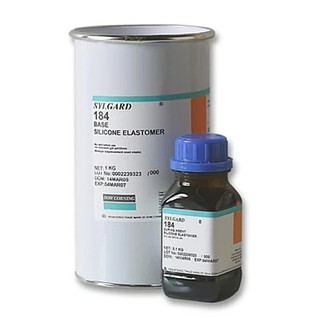
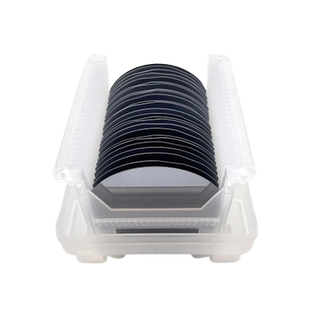
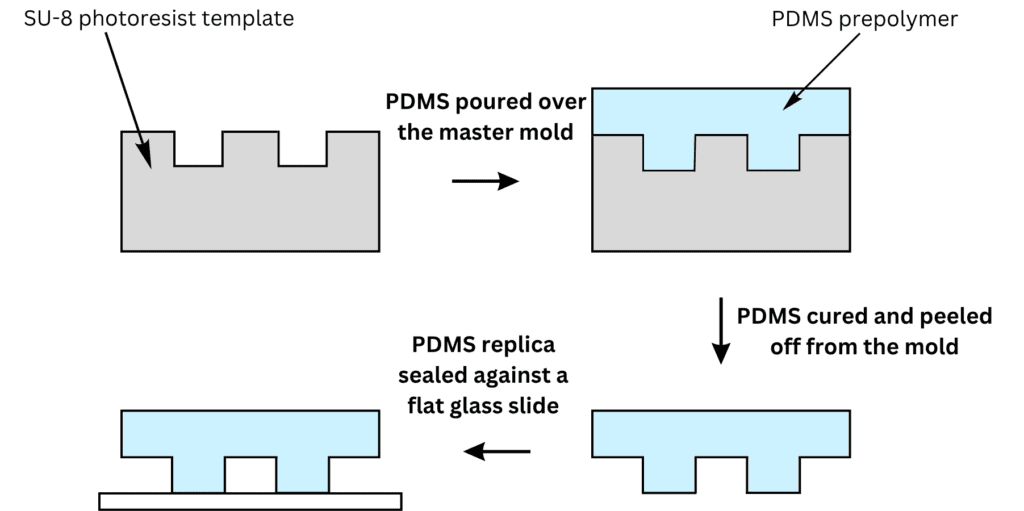
The process begins with a master mold, typically produced by photolithography on a silicon wafer. A liquid elastomer such as PDMS is poured over the master, cured, and then removed to create a replica containing the inverse of the original features.
Advantages of Replica Molding
Several characteristics make replica molding particularly attractive for the fabrication of microfluidic chips:
- High-fidelity reproduction of microscale features
- Excellent optical transparency when using PDMS
- Suitable for rapid prototyping
- Low fabrication cost
- Master mold reusability
🚨 Limitations: The quality of replica-molded structures is highly dependent on the accuracy of the master mold. In addition, commonly used materials such as PDMS may exhibit solvent swelling, molecular absorption, or mechanical deformation in certain applications.
Typical Applications of Replica Molding
In microfluidics, replica molding is primarily used to fabricate microchannels, lab-on-a-chip devices, organ-on-chip systems, cell culture platforms, and other PDMS-based fluidic platforms following bonding to a substrate.
Microcontact Printing (µCP)
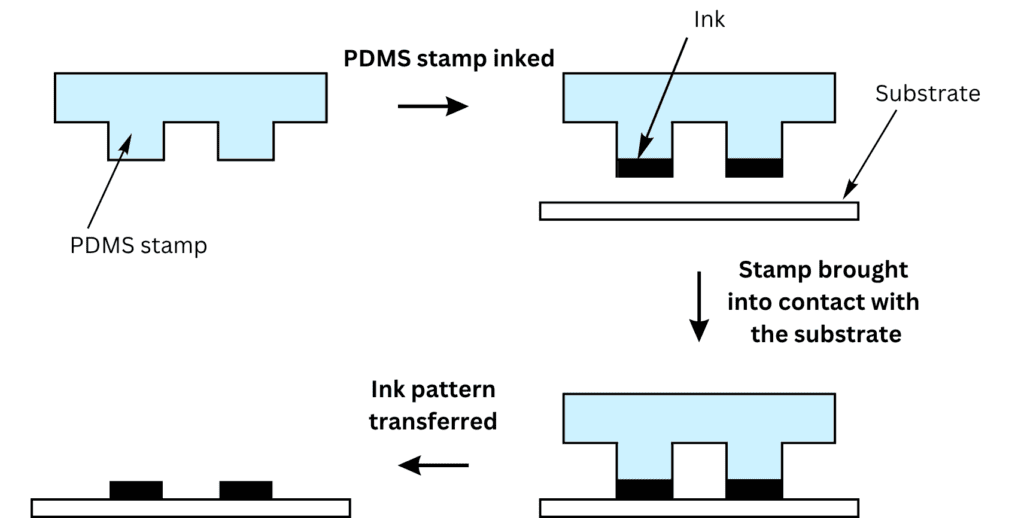
Microcontact printing is a pattern transfer technique that uses an elastomeric stamp to deposit molecules onto a surface in a controlled arrangement.
A patterned PDMS stamp is coated with a molecular "ink" and brought into contact with a substrate to transfer selected molecules onto the surface. The transferred pattern can contain proteins, DNA, nanoparticles, or other functional materials.
Unlike replica molding, which creates physical structures, microcontact printing is primarily used to engineer surface chemistry and biological interfaces.
Advantages of Microcontact Printing
Several properties make microcontact printing particularly well suited for biomolecular patterning and surface engineering in biological and microfluidic applications:
- Precise surface functionalization
- High spatial control of biomolecule placement
- Compatible with biological materials
- Cost-effective fabrication process
🚨 Limitations: Microcontact printing can suffer from reduced pattern fidelity over large areas, non-uniform ink transfer, and deformation of the elastomeric stamp, which may affect reproducibility in some applications.
Typical Applications of Microcontact Printing
Microcontact printing is commonly used for protein patterning, biosensor fabrication, cell culture substrates, and surface functionalization in biomedical and microfluidic applications.
Micromolding in Capillaries (MIMIC)
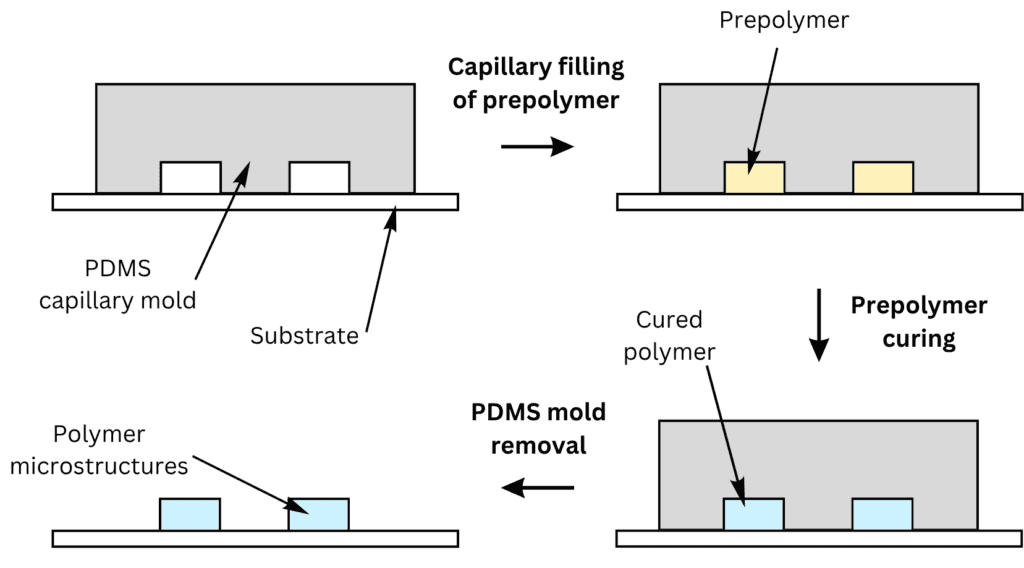
Micromolding in capillaries (MIMIC) is a soft lithography method that uses capillary forces to guide liquid materials into predefined microstructures.
A PDMS mold is placed onto a substrate, creating a network of empty channels. A liquid prepolymer is introduced at the channel entrance and spontaneously fills the structure through capillary action before curing.
Because the process does not require external pumping or pressure systems, MIMIC offers a simple approach for fabricating continuous microstructures.
Advantages of Micromolding in Capillaries
Several features make micromolding in capillaries particularly suitable for fabricating continuous microstructures and complex microfluidic geometries:
- Low-cost fabrication
- Ability to create high-aspect-ratio structures
- Good control of feature dimensions
- Compatible with various polymer materials
🚨 Limitations: MIMIC relies on efficient capillary filling, making it sensitive to air bubble formation, incomplete filling, and variations in surface wetting properties.
Typical Applications of Micromolding in Capillaries
Micromolding in capillaries is commonly used for the fabrication of microfluidic channels, microreactors, lab-on-a-chip devices, and drug-delivery platforms requiring continuous patterned microstructures.
Microtransfer Molding (µTM)
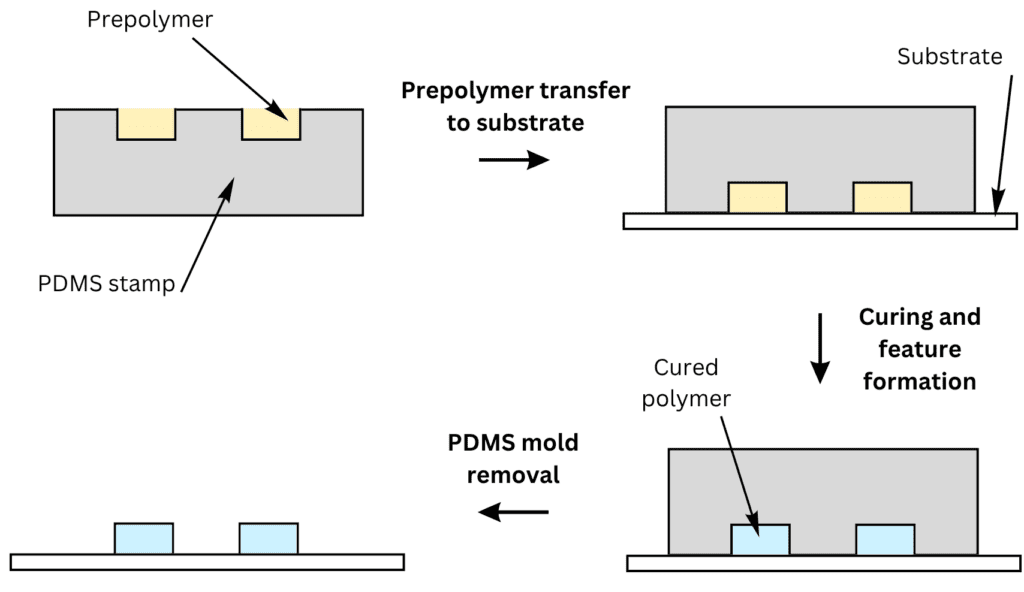
Microtransfer molding is a replication technique in which a liquid prepolymer is deposited within a patterned mold and subsequently transferred onto a substrate.
After curing, the transferred material forms microscale structures with high resolution and good structural fidelity. The technique is particularly useful when multiple materials or layered architectures are required.
Microtransfer molding enables the fabrication of complex geometries while maintaining relatively simple processing conditions.
Advantages of Microtransfer Molding
The growing use of microtransfer molding in microfabrication is driven by several key advantages:
- High-resolution feature replication
- Suitable for multilayer microfluidic devices
- Broad material compatibility
- Low fabrication cost
- Good pattern uniformity
🚨 Limitations: Microtransfer molding requires precise mold alignment and controlled material transfer, and defects such as incomplete filling or layer misalignment can affect device performance.
Typical Applications of Microtransfer Molding
Microtransfer molding is commonly used to fabricate multilayer microfluidic devices, patterned polymer structures, hydrogel-based devices, and microsystems requiring high-resolution feature replication.
Nanoimprint Lithography
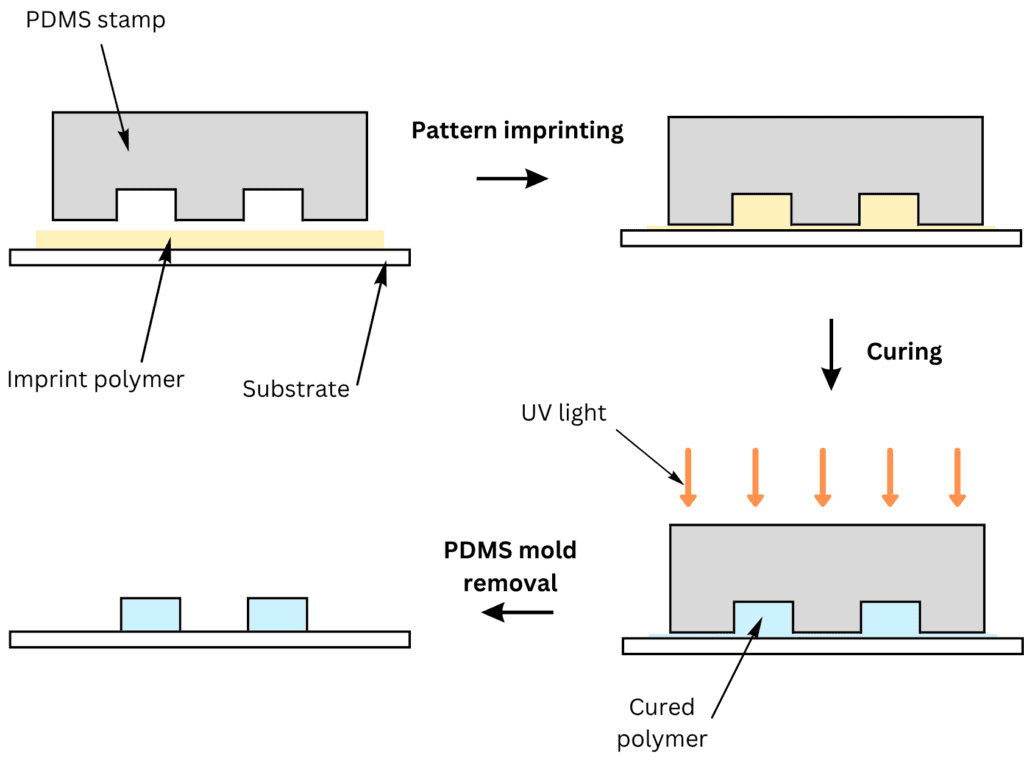
Nanoimprint lithography extends soft lithography principles to nanoscale fabrication. In this technique, a patterned mold mechanically embosses a thin polymer layer to generate nanostructures with extremely high resolution.
The process can produce features well below the dimensions typically achievable using standard microfabrication approaches, making it particularly attractive for nanofluidics and advanced biosensing applications.
Advantages of Nanoimprint Lithography
Nanoimprint lithography has gained significant interest in micro- and nanofabrication due to several key advantages:
- Nanometer-scale resolution capability
- High pattern fidelity and accuracy
- Excellent feature uniformity across patterns
- Suitability for large-area fabrication
- Compatibility with nanofluidic device applications
🚨 Limitations: Nanoimprint lithography requires high-precision molds and controlled processing conditions, and challenges such as mold wear, pattern defects, and limited flexibility in 3D structuring can restrict certain applications.
Typical Applications of Nanoimprint Lithography
Nanoimprint lithography is commonly used for nanofabrication of photonic devices, biosensors, nanoelectronic components, and nanofluidic systems requiring precise nanoscale patterning.
Other Soft Lithography Techniques
Although the techniques described above represent the most widely used approaches, several other soft lithography methods have emerged for specialized microfabrication and microfluidic applications. While less common, these approaches can provide unique advantages depending on the material, geometry, or fabrication requirements.
Solvent-Assisted Micromolding (SAMIM)
Solvent-assisted micromolding uses a solvent to soften a polymer surface before pattern transfer from a mold. It is mainly used for fabricating micro- and nanostructures on thermoplastic materials while avoiding high processing temperatures.
Nanotransfer Printing (nTP)
Nanotransfer printing is a high-resolution additive patterning technique that transfers nanostructured metal features from a silicon or PDMS stamp onto substrates, such as glass or polymers, using surface chemistry-controlled release and adhesion layers. Capable of producing sub-100 nm structures, nTP is widely used in electronics, chemical sensing, plasmonics, and other nanotechnology applications.
Comparison of Soft Lithography Techniques
Each soft lithography technique offers distinct advantages in terms of resolution, fabrication complexity, materials compatibility, and intended application. The table below summarizes the main differences between the most commonly used soft lithography techniques in microfluidics.
| Technique | Typical Use | Resolution | Complexity | Main Strength |
|---|---|---|---|---|
| Replica Molding | General microfluidic device fabrication | Micro- to nanoscale | Low | Simple, low-cost replication |
| Microcontact Printing | Surface patterning and biofunctionalization | Micro- to nanoscale | Low to moderate | Precise surface patterning |
| Micromolding in Capillaries | Complex microstructure fabrication | Microscale | Moderate | Capillary-driven structure formation |
| Microtransfer Molding | Multilayer microfabrication | High-resolution microscale | Moderate to high | High-fidelity multilayer fabrication |
| Nanoimprint Lithography | Nanofabrication and nanofluidics | Nanoscale | High | Nanometer-scale resolution |
Choosing the Right Soft Lithography Technique
Selecting the most suitable soft lithography technique depends on the required resolution, material compatibility, fabrication complexity, and the intended microfluidic application.
- Replica Molding (REM) → when rapid, low-cost fabrication of standard PDMS microfluidic devices is required
- Microcontact Printing (µCP) → when precise biomolecular or surface patterning is needed
- Micromolding in Capillaries (MIMIC) → when continuous microstructures and capillary-driven filling are advantageous
- Microtransfer Molding (µTM) → when multilayer architectures or more complex device geometries are required
- Nanoimprint Lithography (NIL) → when nanometer-scale resolution and high pattern fidelity are critical
💡 Conclusion
Soft lithography encompasses several complementary fabrication techniques that enable the production of microfluidic devices, surface patterns, and nanoscale structures. From replica molding and microcontact printing to MIMIC, microtransfer molding, and nanoimprint lithography, each method offers unique advantages that make it suitable for specific microfluidic applications, ranging from biological characterization to advanced microsystem development in research laboratories.
Stay tuned for more insights on soft lithography, microfabrication, PDMS microfluidics, and other techniques driving innovation in microfluidic devices 🔬!
📧 If you have any questions or feedback, please feel free to contact us at contact@darwin-microfluidics.com.
❓ FAQ: Soft Lithography in Microfluidics
Q1: What are the main types of soft lithography techniques?
Replica molding, microcontact printing, micromolding in capillaries (MIMIC), microtransfer molding, and nanoimprint lithography are among the most widely used soft lithography techniques.
Q2: Which soft lithography technique is most commonly used in microfluidics?
Replica molding is the most commonly used technique because it enables rapid and cost-effective fabrication of PDMS-based microfluidic devices.
Q3: What is the difference between replica molding and microcontact printing?
Replica molding creates physical microstructures, whereas microcontact printing transfers molecules or materials onto a surface to create patterned coatings.
Q4: Which soft lithography technique is best for biomolecule patterning?
Microcontact printing is widely used for patterning proteins, DNA, cells, and other biomolecules on surfaces with high spatial precision.
Q5: Can soft lithography techniques create nanoscale structures?
Yes. Techniques such as nanoimprint lithography and nanotransfer printing can produce features with dimensions in the nanometer range.
Q6: Which soft lithography technique is best for multilayer microfluidic devices?
Microtransfer molding is particularly suitable for fabricating multilayer structures and integrating multiple functional layers within a single device.
Q7: How do I choose the right soft lithography technique?
The choice depends on the required resolution, material compatibility, fabrication complexity, and the intended application of the final device.

🔗 References
Alexandre-Franco, María F. et al. Recent Advances in Polymer Science and Fabrication Processes for Enhanced Microfluidic Applications: An Overview. Micromachines 2024, 15(9): 1137. https://doi.org/10.3390/mi15091137
Maier, Thomas L. et al. (2020). Lateral silicon oxide/gold interfaces enhance the rate of electrochemical hydrogen evolution reaction in alkaline media. J. Chem. Phys. , 152 (15): 154705. https://doi.org/10.1063/5.0003295
Kim, Pilnam et al. (2008). Soft Lithography for Microfluidics: a Review. Biochip Journal. 2(1).
Qin, D., Xia, Y. & Whitesides, G. Soft lithography for micro- and nanoscale patterning. Nat Protoc 5, 491–502 (2010). https://doi.org/10.1038/nprot.2009.234
