
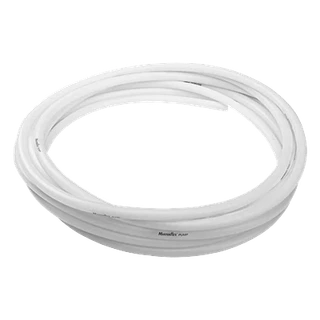
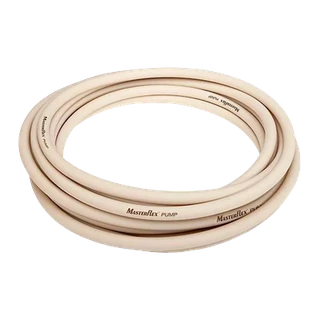
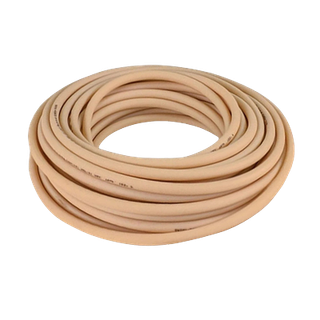
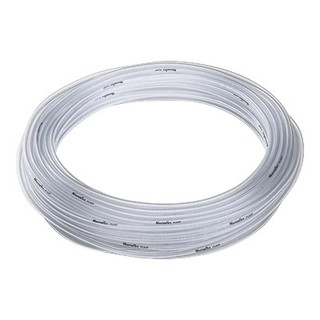
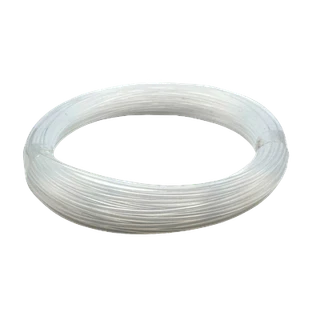
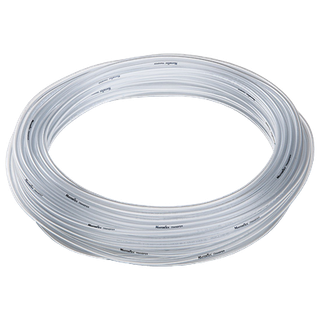
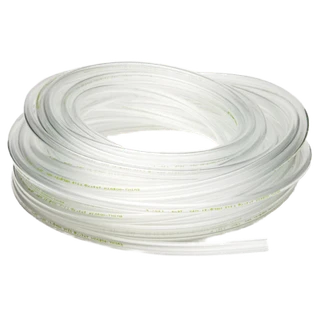
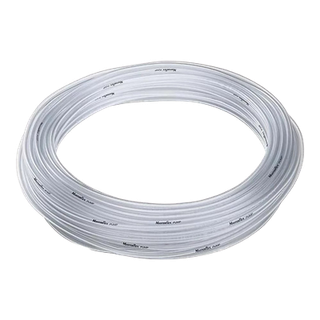
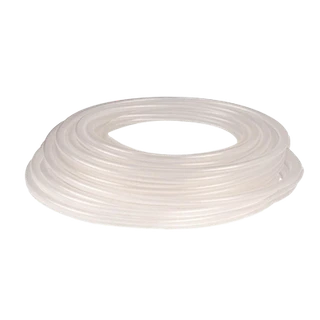
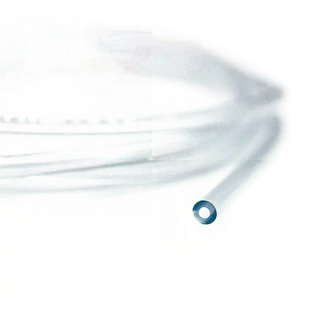
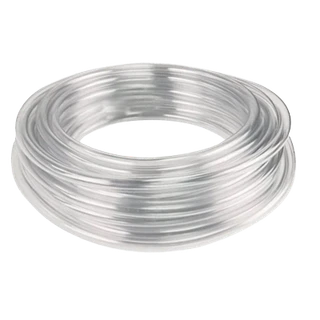
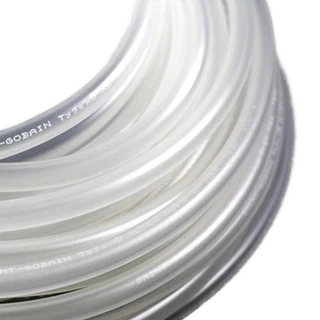

Selecting the right tubing for microfluidic applications requires careful consideration of chemical compatibility to ensure system reliability. Versilon 2001 is valued for its durability and resistance to many chemicals, making it a good choice for a range of uses.
However, like all materials, Versilon 2001 has limitations and may not be compatible with every chemical. This guide provides a chemical compatibility table for Versilon 2001 tubing, based on data (at 20°C) from Tubes International, to help users evaluate its suitability for specific needs.
Refer to this table to make informed choices and maintain the efficiency and safety of your system.
💡 The chemical compatibility rating key is as follows:
- A = Excellent chemical compatibility (no effect)
- B = Good chemical compatibility (minor effect: slight corrosion or discoloration)
- C = Fair (moderate effect: not recommended for continuous use; softening, loss of strength, swelling and/or shrinkage)
- D = Severe effect (not recommended for use; severe softening, swelling and/or shrinkage)
🚨 The compatibility ratings provided in these tables are for general guidance only and may not be complete or accurate. They do not address potential contamination or changes in fluid properties due to tubing interaction. We do not guarantee the suitability of any material for specific purposes or the impact of tubing on fluid quality. For critical applications, conduct specific tests or seek expert advice.
Versilon 2001 Tubing: Chemical Compatibility Table
| Chemical Substance | Compatibility |
|---|---|
| A | |
| Acetamide 67% | B |
| Acetic acid 10% | B |
| Acetic acid 50-60% | A |
| Acetic aldehyde | D |
| Acetic anhydride | A |
| Acetone | C |
| Acetone solvents | D |
| Acetonitrile | B |
| Acetyl bromide | C |
| Acetyl chloride | C |
| Acetylene (gas) | A |
| Acrylonitrile | B |
| Adipic acid | B |
| Air | A |
| Aliphatic hydrocarbons | D |
| Allyl alcohol | A |
| Alum 5% | A |
| Aluminium sulphate 50% | A |
| Aluminum chloride 53% | A |
| Aluminum hydroxide 2% | A |
| Aluminum salts | A |
| Amines | D |
| Ammonia (gas) | A |
| Ammonium acetate 45% | A |
| Ammonium carbonate 50% | A |
| Ammonium hydroxide 30% | A |
| Ammonium hydroxide 5-10% | A |
| Ammonium persulfate 30% | A |
| Ammonium salts | A |
| Ammonium sulphate 30% | A |
| Amyl acetate | D |
| Amyl alcohol (pentanol) | A |
| Amyl chloride | D |
| Anhydrous ammonia (liquid) | B |
| Anhydrous bromine (liquid) | D |
| Aniline | D |
| Antimony salts | A |
| Aqua regia | A |
| Aromatic hydrocarbons | D |
| Arsenic acid 20% | A |
| Arsenic salts | A |
| B | |
| Barium carbonate 1% | A |
| Barium hydroxide 5% | A |
| Beer | A |
| Benzaldehyde | C |
| Benzene | D |
| Benzenesulfonic acid | D |
| Benzoic acid | D |
| Benzyl alcohol | A |
| Bleach 22% | A |
| Borax 6% | A |
| Boric acid 4% | A |
| Butadiene | B |
| Butane | B |
| Butyl acetate | D |
| Butyl alcohol (butanol) | A |
| Butyric acid | D |
| C | |
| Calcium carbonate 25% | A |
| Calcium chloride 30% | A |
| Calcium hydroxide 10% (in glycerol) | A |
| Calcium hypochlorite 20% | A |
| Calcium nitrate 55% | A |
| Calcium salts | A |
| Calcium sulfate 1% | A |
| Carbon dioxide | A |
| Carbon disulfide | D |
| Carbon monoxide | A |
| Carbon tetrachloride | D |
| Carbonic acid | A |
| Castor oil | B |
| Cellosolve acetate | D |
| Celosolw | D |
| Chloric acid (I) 25% | A |
| Chloroacetic acid 20% | A |
| Chlorobenzene | D |
| Chloroform | D |
| Chlorosulfonic acid | D |
| Chromic acid 10-20% | A |
| Chromic Acid 50% | B |
| Citric acid 10-20% | A |
| Coconut oil | B |
| Copper (II) chloride 40% | A |
| Copper (II) sulphate 13% | A |
| Copper nitrate II 70% | A |
| Corn syrup | A |
| Cotton oil | C |
| Cresol | A |
| Cresol acid | D |
| Crude oil | D |
| Cyclohexane | D |
| Cyclohexanone | C |
| D | |
| Deionized water | A |
| Detergents | A |
| Dibutyl phthalate | A |
| Dichloroethane | A |
| Diesel oil | D |
| Diethyl phthalate | A |
| Diethylamine 2.5% | A |
| Diethylene glycol | A |
| Dimethylformamide | A |
| Dimethylsulfoxide | B |
| Dioxane | D |
| Distilled water | A |
| Dry chlorine (gas) | C |
| E | |
| Essential oil | D |
| Ether | D |
| Ethyl acetate | D |
| Ethyl alcohol (ethanol) | A |
| Ethyl benzoate | D |
| Ethyl chloride | D |
| Ethyl ether | D |
| Ethylene bromide | C |
| Ethylene chlorohydrin | D |
| Ethylene dichloride | D |
| Ethylene glycol | A |
| Ethylene oxide | A |
| F | |
| Fatty acids | C |
| Fluorine (gas) | D |
| Fluoroboric acid 48% | A |
| Fluorosilicic Acid 25% | A |
| Formaldehyde (formic aldehyde) 37% | C |
| Formic acid 25% | A |
| Formic acid 40-50% | A |
| Formic acid 98% | A |
| Freon 11 | A |
| Freon 12 | A |
| Freon 22 | A |
| Fruit juice | A |
| Furfural | D |
| G | |
| Gallus acid 17% (in acetone) | D |
| Gelatin | A |
| Glacial acetic acid | B |
| Glucose 50% | A |
| Glycerol (glycerin) | A |
| Glycolic acid 70% | A |
| H | |
| Heptane | D |
| Hexane | D |
| Hydraulic oils (phosphate ester based) | D |
| Hydrazine | D |
| Hydrobromic acid | A |
| Hydrobromic acid 20-50% | A |
| Hydrocyanic acid | A |
| Hydrofluoric acid 10% | A |
| Hydrofluoric acid 25% | A |
| Hydrofluoric acid 40-48% | A |
| Hydrogen (gas) | A |
| Hydrogen peroxide 10% | A |
| Hydrogen peroxide 3% | A |
| Hydrogen peroxide 30% | A |
| Hydrogen peroxide 90% | B |
| Hydrogen sulphide | A |
| Hydroquinone 7% | A |
| I | |
| Iodine 50 ppm | A |
| Iron (II) sulphide 5% | A |
| Iron (III) chloride 43% | A |
| Iron III nitrate 60% | A |
| Iron sulphate 5% | A |
| Iron(II) chloride 40% | A |
| Isooctane | D |
| Isopropyl acetate | D |
| Isopropyl alcohol (isopropanol) | A |
| Isopropyl ether | D |
| Izobutyl alcohol (isobutanol) | A |
| J | |
| Jet Fuel – JP8 | D |
| K | |
| Kerosene | D |
| Ketones | C |
| L | |
| Lactic acid 3-10% | A |
| Lactic acid 85% | A |
| Lead acetate 35% | A |
| Lead salts | A |
| Lemon oil | D |
| Limonene | D |
| Linoleic acid | C |
| Linseed oil | B |
| Lubricating oils (petroleum based) | D |
| M | |
| Magnesium carbonate 1% | A |
| Magnesium chloride 35% | A |
| Magnesium hydroxide 10% | A |
| Magnesium nitrate 50% | A |
| Magnesium salts | A |
| Magnesium sulphate 25% | A |
| Maleic acid 30% | C |
| Maleic acid 36% | A |
| Mercury | A |
| Mercury chloride 6% | A |
| Mercury cyanide 8% | A |
| Mercury salts | A |
| Methane (gas) | A |
| Methyl acetate | D |
| Methyl bromide | D |
| Methyl chloride | D |
| Methyl ethyl ketone (MEK) | C |
| Methyl isobutyl ketone (MIK) | C |
| Methyl methacrylate | D |
| Methylene chloride | D |
| Milk | A |
| Mineral oil | D |
| Mineral spirit | D |
| Molasses | A |
| Monoethanolamine | D |
| Motor oil | D |
| Muriatic acid (hydrochloric acid) 10% | A |
| Muriatic acid (hydrochloric acid) 37% | A |
| N | |
| Naphthalene | D |
| Natural gas | A |
| Nickel (II) chloride 40% | A |
| Nickel nitrate II 75% | A |
| Nickel salts | A |
| Nickel sulfate 25% | A |
| Nitric acid III 10% | A |
| Nitric acid V 10% | A |
| Nitric acid V 35% | A |
| Nitric acid V 68-71% | A |
| Nitrobenzene | D |
| Nitromethane | D |
| Nitrous oxide | A |
| O | |
| Oils (hydrocarbon based) | D |
| Oils, animal fats | B |
| Oleic acid | D |
| Oleum 25% | A |
| Orthodichlorobenzene | D |
| Oxalic acid 12% | A |
| Oxygen | A |
| Ozone 300pphm | A |
| P | |
| Paint solvents | D |
| Palmitic acid | C |
| Paraffins | D |
| Perchloric acid 67% | A |
| Petrol | D |
| Phenol 5-10% | A |
| Phenol 91% | A |
| Phosphoric (V) acid | A |
| Phosphoric (V) acid 25% | A |
| Phosphoric (V) acid 85% | A |
| Photographic solutions | A |
| Phthalic acid 9% (in alcohol) | A |
| Phthalic anhydride 9% (in alcohol) | A |
| Picric acid 1% | A |
| Potassium carbonate 55% | A |
| Potassium cyanide 33% | A |
| Potassium dichromate 5% | A |
| Potassium hydroxide | A |
| Potassium iodide 56% | A |
| Potassium permanganate 6% | A |
| Potassium salts | A |
| Propane (gas) | A |
| Propanol | A |
| Propylene glycol | A |
| Propylene oxide | A |
| Pyridine | C |
| S | |
| Salicylic acid 1% | A |
| Silicone oils | B |
| Silver nitrate 55% | A |
| Skydrol 500A | D |
| Soap solutions | A |
| Sodium acetate 55% | A |
| Sodium benzoate 22% | A |
| Sodium bicarbonate 7% | A |
| Sodium carbonate 7% | A |
| Sodium chloride 20% | A |
| Sodium chloride 45% | A |
| Sodium cyanide 30% | A |
| Sodium fluoride 3% | A |
| Sodium hydroxide 10-15% | A |
| Sodium hydroxide 30-40% | A |
| Sodium hypochlorite 12.2% | A |
| Sodium hypochlorite 5.5% | A |
| Sodium nitrate 3.5% | A |
| Sodium salts | A |
| Sodium sulphate (IV) 10% | A |
| Sodium sulphate (VI) 5% | A |
| Sodium sulphide 45% | A |
| Stearic acid 5% (in alcohol) | C |
| Styrene (monomer) | D |
| Sulfur dioxide (wet gas) | A |
| Sulfur trioxide (wet) | B |
| Sulphur chloride | A |
| Sulphuric (IV) acid | A |
| Sulphuric (VI) acid 10% | A |
| Sulphuric (VI) acid 30% | A |
| Sulphuric (VI) acid 95-98% | D |
| T | |
| Tannic acid 75% | A |
| Tetrachloroethylene | D |
| Tetrahydrofuran | D |
| Thionyl chloride | A |
| Tin salts | A |
| Tin(II) chloride 45% | A |
| Tin(IV) chloride 50% | A |
| Titanium salts | A |
| Toluene | D |
| Trichloroacetic acid 90% | A |
| Trichloroethane | D |
| Trichloroethylene | D |
| Trichloropropane | D |
| Tricresyl phosphate | A |
| Triethanolamine | D |
| Trisodium phosphate | A |
| Turpentine | D |
| U | |
| Urea 20% | A |
| Uric acid | A |
| V | |
| Vegetable oils | B |
| Vinyl acetate | D |
| W | |
| Wet chlorine (gas) | C |
| Wine acid 56% | A |
| Wine vinegar | A |
| X | |
| Xylene | D |
| Z | |
| Zinc chloride 80% | A |
| Zinc salts | A |