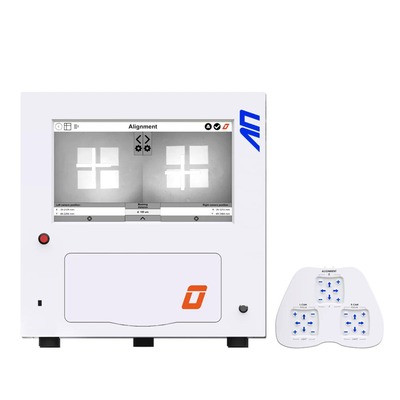
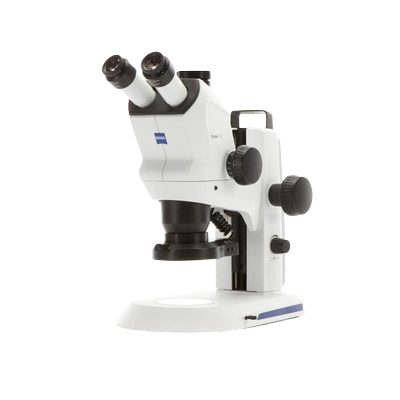
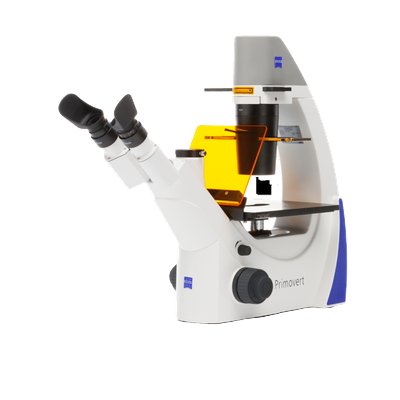
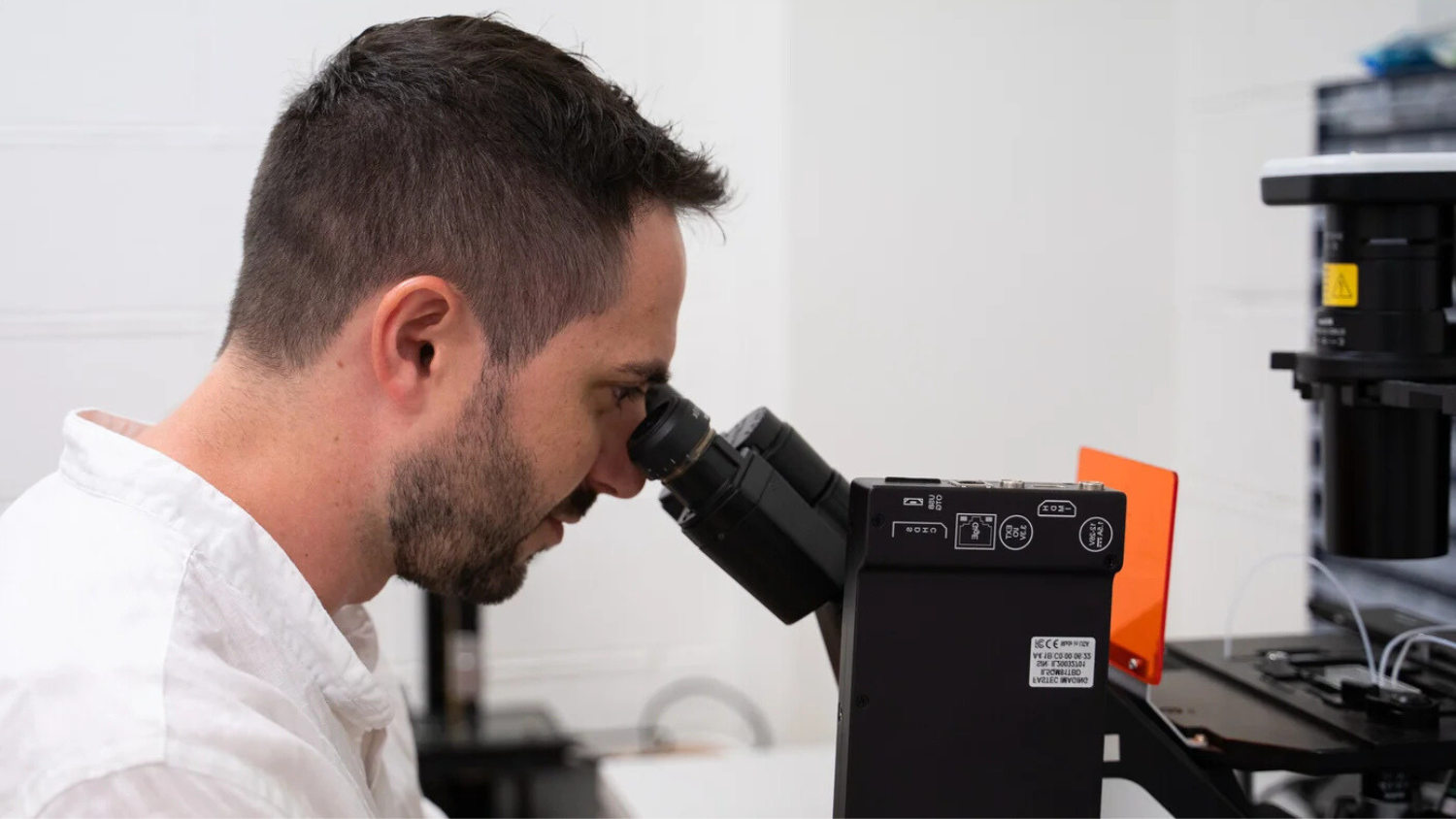
The Sensific ODIN is a modular image-activated cell sorter (IACS) that turns any commercial microscope into a real-time, label-free platform for imaging, analysis and sorting of cells and droplets.
Complete system including the ODIN imaging unit, the SOL pulsed light engine and the Signal hub, with optional sorting and microrheology software modules.
General
Image-activated, assay-driven cell sorting
ODIN moves cell sorting away from single intensity peaks and towards a full image of every event. Each particle is imaged, analysed and classified in real time, so you sort on what the cell actually looks like and how it actually behaves, not only on a fluorescence threshold. The system is label-free by default, and fluorescence channels can be added when your assay requires them.
One platform, five instruments
ODIN is designed as a modular building block rather than a closed instrument. Depending on how you configure it, the same hardware covers several roles in your laboratory:
- Image-activated cell sorter: analyse and sort droplets, cells, spheroids, microorganisms and algae
- Microfluidic camera: record your chip with smart image acquisition so only relevant frames are stored
- Droplet generator: generate and manipulate droplets with a closed feedback loop on droplet size
- Particle analyser: classify and sort any particle type
- Microrheology sensor: track up to 8 particles with sub-pixel precision using the VELOMIR module
Typical applications
- Single-cell sorting, analysis and sequencing workflows
- Cell therapy and personalised medicine
- Drug discovery and drug-cell interaction assays
- Drop-Seq and droplet-based assay screening
- Bacteria, yeast and algae analysis and sorting
- Spheroid generation and sorting
- Sperm and particle analysis
- Microfluidic imaging and microrheological experiments
Practical: sorting takes place in enclosed microfluidic channels, so sterility and cell viability are preserved for downstream use.
Three hardware units, one workflow
The three units are supplied together and designed to work as one instrument: the Signal hub carries both the synchronisation between the camera and the light source and the interface to the rest of your bench, so imaging, illumination and triggering stay on a single time base.
ODIN imaging unit
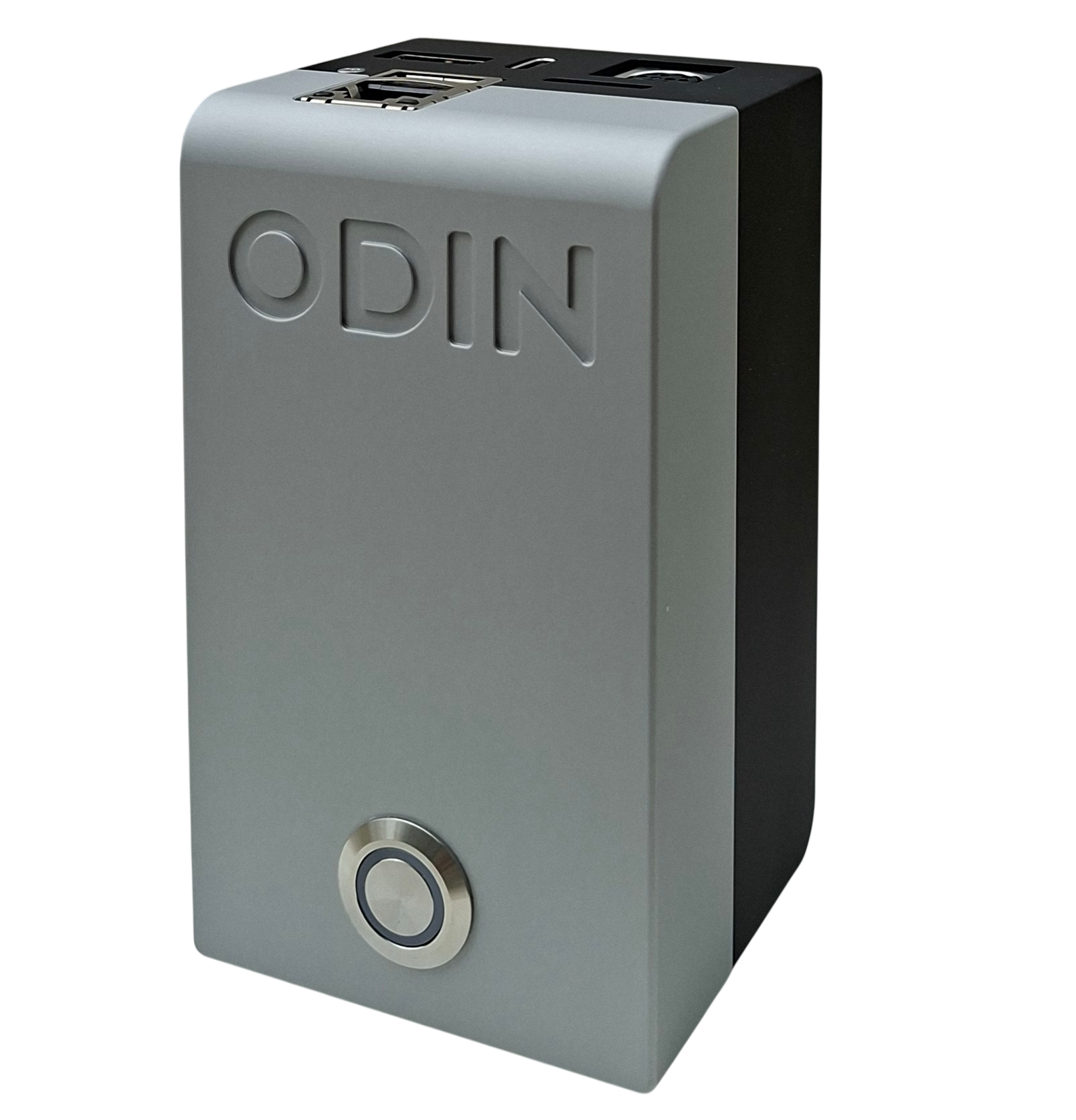
The camera, the analysis engine and the user interface in a single housing running on Linux. No frame grabber and no external processing PC are needed for acquisition and analysis.
SOL light engine
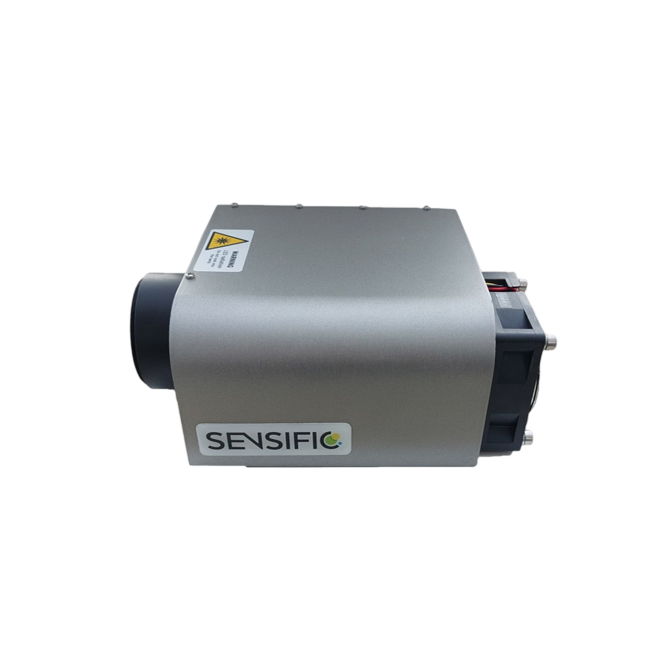
A three-colour LED source matched to common fluorescence filter windows, with a collimated output and pulses short enough to freeze fast-moving particles.
Signal hub
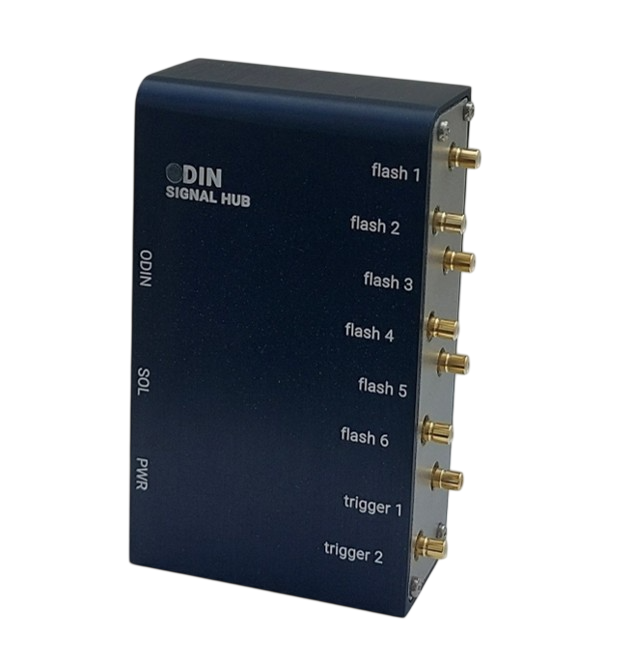
Optocoupled interface between ODIN, the SOL and the rest of your bench, with standard SMB connectors so you can wire in lasers, sorting electronics or your own instrumentation.
Gate your sample in seconds
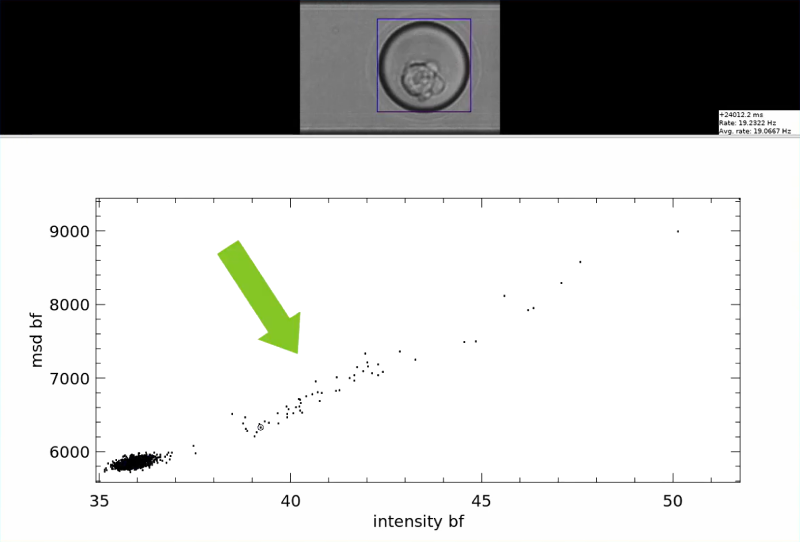
Real-time analysis, no post-processing
Feature extraction runs on the instrument itself, so your results are available while the experiment is still running, even at imaging rates up to 10,000 frames per second.
- More than 40 image and object parameters computed automatically per event
- Plot generator with image link: click a data point in the scatter plot and see the image behind it
- Automatic background subtraction with static or adaptive background
- Experiment log storing every setting alongside the measurement data, with your own notes
- Remote control over HTTP and ZMQ, plus direct storage to NAS or USB media
Ultra-short pulsed illumination for blur-free imaging
The SOL light engine delivers pulses down to the sub-microsecond range in peak power mode, which freezes fast-moving particles in the channel and keeps edges sharp for reliable feature extraction. With the sorting module, up to four imaging settings run in parallel by time multiplexing, so you can combine bright field with three fluorescence colours in a single pass. Short exposures also limit photodegradation of sensitive samples.
Smart image acquisition: record what matters
Long screening runs generate enormous amounts of video. Smart image acquisition lets you apply your own filter criteria to decide what is written to disk: all images, only frames containing particles, one image per particle, or automatic removal of partially imaged particles. Sensific reports storage reductions of up to 95 %, which makes rare event detection and extended recording sessions practical.
Recording is continuous and unlimited in length, in RAW, uncompressed AVI, MJPEG or MP4, with measurement data exported to XLS, XLSX or CSV.
Assay-driven sorting in practice
Features & benefits
- Sort on the full image, not a single peak: combining morphological and fluorescence criteria cuts false positives and negatives and raises the purity of your collected fraction.
- Work label-free: no staining step means less sample preparation and no dye-related perturbation of your cells.
- Keep your microscope and your chips: ODIN adapts to commercial microscopes and third-party microfluidic chips, so there is no vendor lock-in on consumables.
- Skip the acquisition PC: imaging, analysis and control run on the instrument, which simplifies installation and keeps latency below 200 microseconds.
- See your quality control immediately: a multispectral image is recorded per particle before and after sorting, so you can verify a run as it happens instead of after the fact.
- Cut your storage bill: smart acquisition stores only relevant frames and makes very long screening campaigns manageable.
- Recover viable cells: dielectrophoretic sorting in enclosed channels maintains sterility and viability for downstream culture or sequencing.
- Grow the system with your projects: the sorting module, the VELOMIR microrheology module, lasers and filter sets can be added later without replacing the base system.
Content
ODIN base system (supplied as one unit)
1x ODIN imaging unit with integrated analysis software (Linux OS)
1x Power supply, 5 V / 5 A, 2.1 x 5.5 mm barrel jack
1x SOL three-colour pulsed LED light engine with SM2-threaded optical port
1x Power supply for SOL, 5 V / 3 A, USB-C
1x ODIN Signal hub with 8 SMB connectors and 5 V micro-USB power supply
1x 9-pin multi-purpose connector cable (ODIN to Signal hub)
1x 6-pin multi-purpose connector cable (SOL to Signal hub)
5x SMB (M) to SMB (M) cables, 2x SMB (M) to BNC (M) cables
1x Transport case
1x User manual (digital copy)
Specifications
ODIN imaging unit
| Function |
High-performance camera with integrated analysis and feature extraction |
| Resolution [px] |
1280 x 1024 px |
| Frame rate [fps] |
210 fps at 1280 x 1024 px; up to 10,000 fps at 400 x 32 px |
| Sensor type |
Monochrome, 10-bit colour depth, 1/2" active area, global shutter |
| Pixel size [µm] |
4.8 µm |
| Spectral range [nm] |
300-1000 nm |
| Quantum efficiency [%] |
58 % at 550 nm (peak); 62 % at 630 nm |
| Latency [µs] |
< 200 µs from image capture to analysis result; control precision < 10 ns |
| Readout regions |
2 freely selectable, simultaneous regions (two-stage processes, inline quality control, parallelisation) |
| Outputs |
6 flash outputs for light control; 2 triggers for sorting or device control (3.3 V TTL) |
| Interfacing |
C-mount; DVI-D; USB 2.0; Ethernet 1 Gbit; 9-pin multi-purpose connector |
| Operating system |
Linux with ODIN software |
| Power supply |
5 VDC, 5 A, 2.1 x 5.5 mm barrel jack |
| Fluorescence compatibility |
Up to 4 time-multiplexed channels with the sorting module; excitation sources not included |
SOL pulsed light engine
| Function |
Ultra-short pulse three-colour LED light engine for blur-free imaging |
| Wavelengths [nm] |
Standard configuration: blue 470 nm, green 530 nm, red 660 nm; alternative LEDs including UV available on request |
| Optical output |
Collimated, dichroic beam combination, SM2-threaded optical port |
| Microscope adapters |
Optional connectors for Zeiss, Olympus or Nikon illumination ports |
| Operation modes |
Continuous wave and ultra-short pulse (peak power) mode |
| Drive current [mA] |
0 to 1000 mA per channel in continuous wave mode |
| Pulse length [µs] |
0.1 to 5 µs |
| Pulse frequency [kHz] |
> 10 kHz |
| Control |
Via ODIN and Signal hub over USB; optional standalone PC software for use without ODIN |
| Power supply |
5 VDC, 3 A, USB-C |
The SOL is typically used for imaging, with external lasers added when your assay requires fluorescence. Virtually any excitation wavelength can be accommodated, with matching optical filters selected for your configuration, and the SOL LEDs themselves can be replaced with alternative wavelengths, including UV. Sensor sensitivity varies across the spectrum, so the excitation source and its power are chosen together with your application.
Signal hub
| Function |
Optocoupled signal interface and electrical protection between ODIN, the SOL and your laboratory instrumentation |
| Connectors |
9-pin multi-purpose input from ODIN; 6-pin multi-purpose output to SOL; 8x SMB standard connectors |
| Signal transmission |
High-speed optocoupled transmission of up to 8 signals, 5 V TTL |
| Integration |
Compatible with ODIN, SOL and common laser light engines for fluorescence |
| Power supply |
5 V switching supply, micro-USB, required only when used without the SOL |
| Supplied cables |
5x SMB (M) to SMB (M); 2x SMB (M) to BNC (M) |
Software
| Interface |
Fully graphical user interface for observation, analysis and control |
| Observation toolbox |
Zoom, contrast adjustment, exposure, gain and frame rate settings, live intensity histogram, scale bar, screenshot tool, region of interest selection, SOL illumination control |
| Analysis toolbox |
Automatic image evaluation on up to 2 regions of interest, static or adaptive background subtraction, image filtering and smart grouping |
| Detection parameters |
More than 40 image and object parameters computed automatically, including intensity, object size, contour, position, velocity and circularity |
| Plotting engine |
Scatter and line plots with image link, cross-channel and intra-channel visualisation, gate combining |
| Gating |
Freely configurable, graphical marking in scatter plot, arbitrary polygon selection |
| Smart image acquisition |
Freely selectable filter criteria: all images, only particles, one image per particle, partial particle removal |
| Experiment log |
All experiment settings saved with the measurement data, with user notes and unlimited parameter logging |
| Storage formats |
RAW; AVI uncompressed; MJPEG; MP4; XLS; XLSX; CSV (infinite recording) |
| Storage media |
Local storage, USB mass storage (ext3/4, exFAT, NTFS), network storage such as NAS |
| Remote control |
HTTP and ZMQ API |
Sorting and control module (optional)
| Sorting method |
Active dielectrophoretic |
| Sorting efficiency, selectivity, purity [%] |
Up to 99 % demonstrated |
| Droplet size |
10 µm to 1 mm diameter (0.0004 to 0.039 in) |
| Illumination channels |
Up to 4 time-multiplexed channels, for example bright field plus three fluorescence colours |
| Channel settings |
Independent camera and analysis settings per channel, custom labelling and colour indication, simultaneous 4-channel display |
| Decision engine |
Graphical gating in plots, custom C code compatibility |
| Triggers |
2 independent triggers, freely adjustable length and duration, 5 V TTL |
| Detection methods |
Bright field; phase contrast; fluorescence with external laser or LED sources (e.g. 408, 488, 532, 561, 638 nm) |
| Quality control |
In-line multispectral image per particle before and after sorting; all droplets recorded |
Modularity and integration
| Microscope compatibility |
Any commercial microscope with a C-mount port; SOL adapters available for Zeiss, Olympus and Nikon illumination ports |
| Microfluidic chips |
Open to third-party chips, no vendor lock-in |
| Optional integration |
Adaptable sorting techniques, lasers, fluorescence filter sets and detection technologies; inline droplet generation or reinjection; incubation and temperature control; sterilisation |
| Sample viability |
Maximised cell viability, sample available for downstream use |
| Warranty |
12 months from shipment, extension available on request |
| Dimensions [mm] |
ODIN: 107.8 x 63.15 x 55.4 mm
SOL:
Signal Hub: |
| Weight [kg] |
ODIN: 0.5 kg |
| Operating temperature [°C] |
4 - 40 °C, non-condensing |
Documentation
ODIN product brochure
ODIN specification sheet
ODIN operating manual
ODIN setup schematics
Video tutorial: How to analyse and sort with ODIN